Otis History: The American Revolution
By Peter Cameron
January/February 2025
The Beginning: An Independent Culture
Throughout 2026, to celebrate our 250th anniversary, our history columns will focus on the Revolutionary War and winning our country’s independence. 250 years ago, most British citizens in the 13 colonies decided to terminate their bonds with England and fight to create an independent nation. This month’s installment will look at how the English colonists developed independent cultural, economic, and political ideologies. Those traits determined the colonists' reaction to the economic oppression the British King and Parliament imposed on them in the 1760s and 1770s. Let’s examine the traits of those who settled the colonies and the events that inevitably created such independent thinking.
The colonial settlers were fiercely independent; they had to be. Unlike today’s high-tech world, in the 1600s when they left to sail 3,000 miles, there was no help to be had. They left everything they knew behind for the unknown. They had little information about their destination. They knew it was dangerous at every turn: the voyage, initial survival once they got there, and the indigenous people who would challenge them. Simple geography and communications dictated the colonists were on their own. It took more than 2 months to communicate with London and get a response. They neither expected nor received help from England.
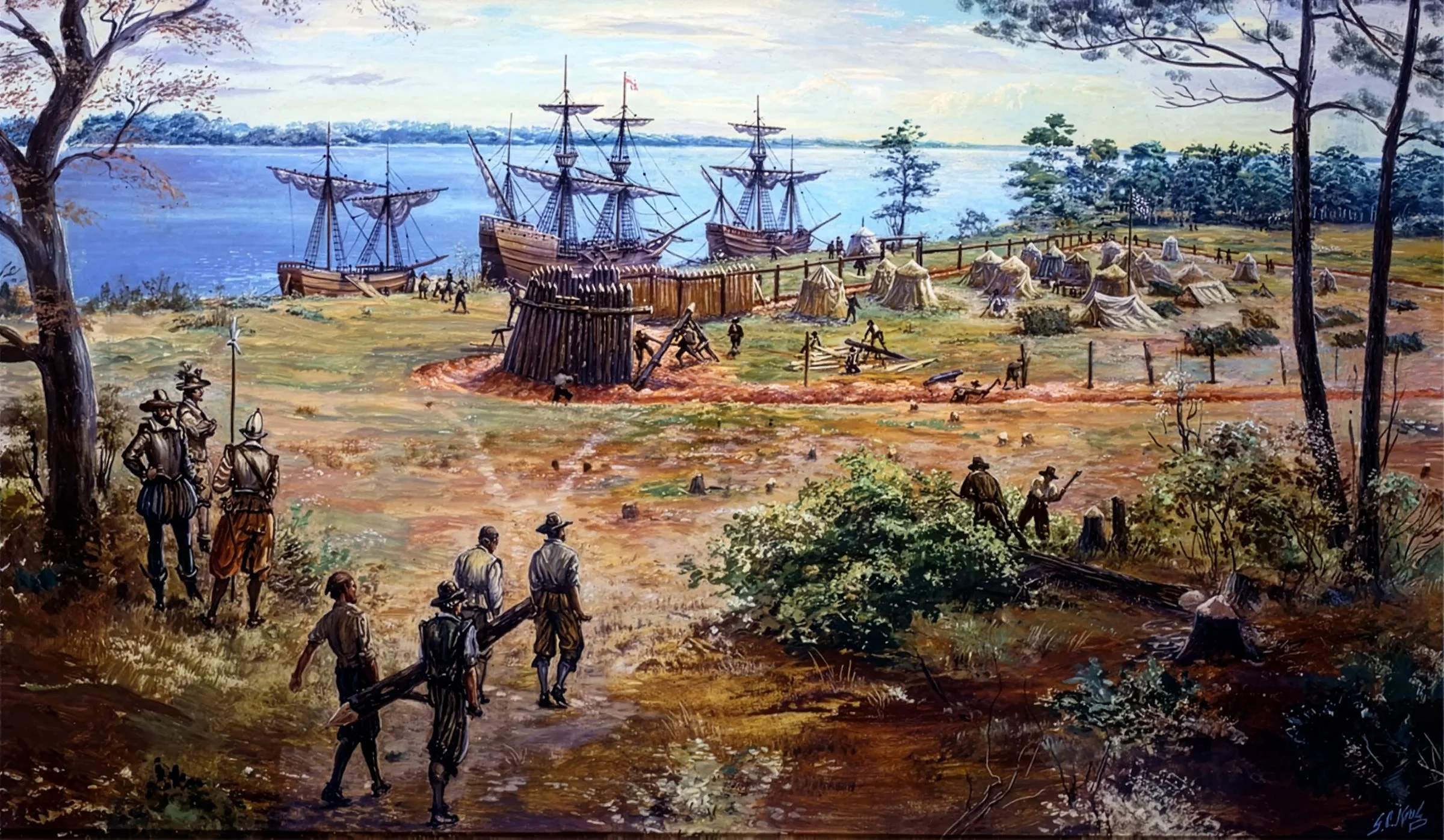
Painting by Sidney King depicts the construction of the fort at Jamestown in 1607. Image Source: National Park Service.
Some settlers were fleeing religious persecution from the king and Church of England. They managed to establish prosperous, religious settlements in the New World, based on their ethics and faith. They alone, with the help of God, decided their fate, not the monarchy nor the Church of England. These folks neither wanted nor needed British oversight or interference.
British colonial economic policy was termed “Mercantilism.” So long as goods and tax revenue flowed to England from the colonies on British ships, the British were content. The colonies supplied 33% of the total British gross national product. During the 17th and early 18th centuries, the English were involved in civil wars at home and almost constant conflicts with Spain and France, demanding their full attention. From the first permanent English settlement at Jamestown from 1607 to 1763 at the conclusion of the French and Indian War, there was little British government oversight of anything going on in the colonies.
There were British laws that governed trade in the colonies. The Navigation Acts required all trade from the colonies to be conducted exclusively with England using only English ships, but enforcement was woefully lax. Independently, the colonies developed a triangle trade with other monarchies in Europe, colonial Africa and the West Indies. The British were aware of this, yet took no steps to enforce the Navigation Acts. In essence the colonies were functioning as an independent country, condoned by the inaction of England.
Each colony convened a colonial legislature. This body functioned independently from any British oversight or royal decree. Run by colonists, colonial legislatures could levy taxes, muster troops, and pass laws. The British, from time to time, took measures to curtail their power, but their efforts were minimal and ineffective. For all practical purposes the colonies were governing themselves, independent of British oversight.
All these actions took place during the Age of Enlightenment, a time when philosophers openly questioned autocratic policies, monarchies, the rule of the Church, separation of power, and advocated government with the consent of the governed. Openly discussed in the 13 colonies, these concepts quickly gained traction and acceptance.
Blend all this together and by 1763 the colonies were acting independently of English rule that had lasted for almost 150 years. They had developed their own independent political, economic, and philosophical culture.
Coming next issue: “When the Mother Country Comes Calling!”