A Toast to Bread: A Tribute to Bread Though History
By David Mittler
December 2025
This story is a toast to bread, a toast (sorry for the pun) to give recognition and appreciation to this nutritious and delicious food source.
Bread and water are the minimum of what we need to survive. For the most part, water is water; hopefully clean, safe to drink. On the other hand, bread is different. It appeals to our senses: first the smell of bread baking, then the feel and taste of eating a crusty slice. Bread brings connections to family (breaking bread at the dinner table), to religion and its journey through history. Knowing about bread helps us know more about ourselves and others - our neighbors and friends and people from different cultures. I’ll be talking about only a few of the many types of bread.
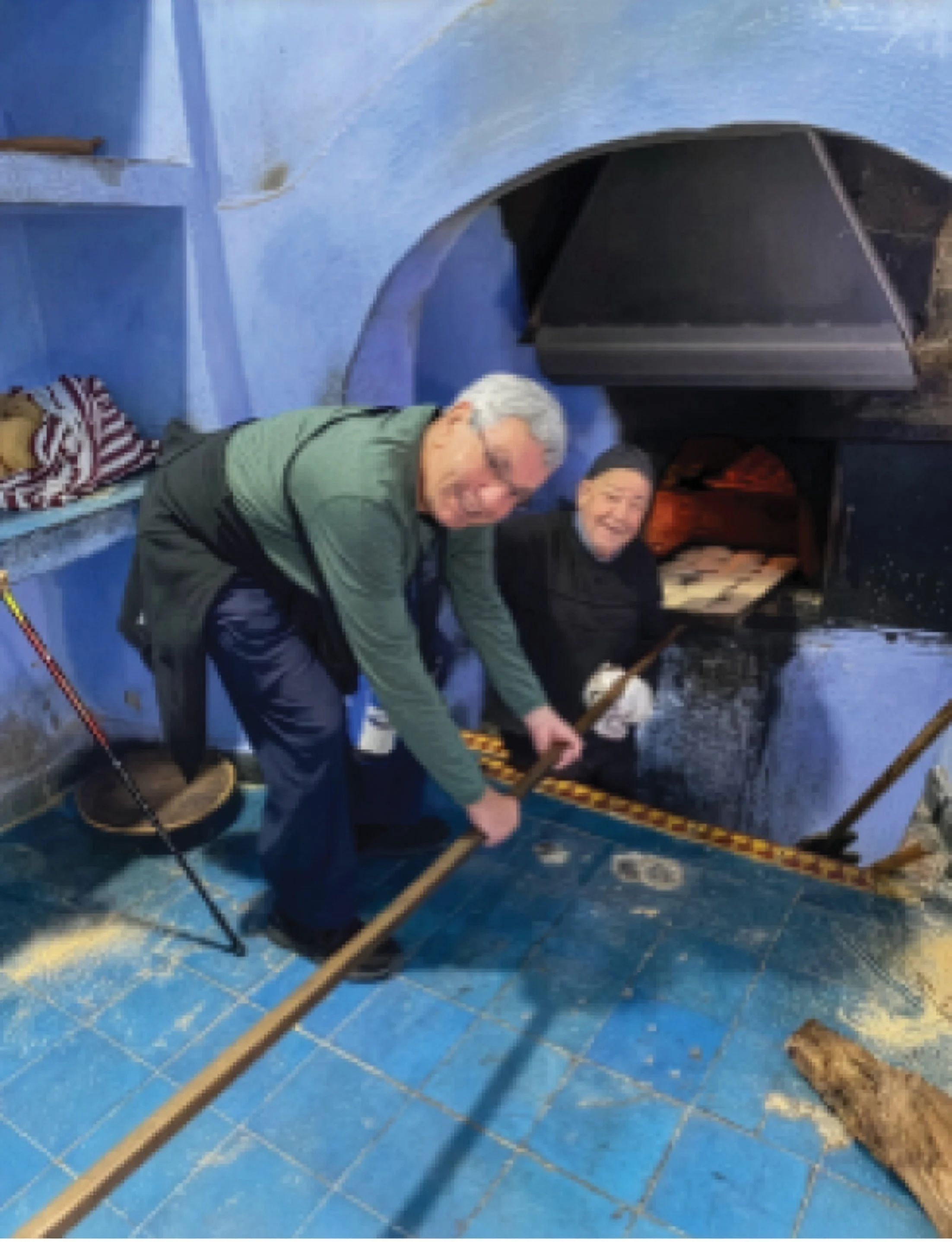
Author as breadmaker. Photo: Courtesy David Mittler
Bread has a fascinating travel history. You can imagine a passport stamp on each slice of bread to show its journey. In the beginning there was matzoh and naan, perhaps the first trail food. As you may know, matzoh is flat, easy to pack and cooks in little time - no rise time needed for the Jewish people to make their exodus from Egypt. In the Passover celebration of the Exodus, matzoh is symbolic of resiliency and freedom. In Christianity, the wafer, derived from matzoh, becomes the spirit of the body of Christ taken in the holy ritual of communion. Naan also bakes quickly, needing no time for rising, and packs flat easy for road trips. This trip was on the Silk Road of commerce from Afghanistan and Persia. Unlike matzoh, baked by escaping slaves, naan was baked for the elite, royalty and merchants traveling this route. Naan requires high heat not available for the common people until later when Tandoori cookers were developed to make it easier to bake for all to enjoy. The popularity of naan spread worldwide with each region adding their own seasonings and applications, such as scoops for dips or sandwich wraps.
Another food for the road, or street, is Italian bread. Before “Subway”sandwiches, Italian bread was an early convenience food for people on the go. Yet, there are so many varieties of Italian bread, not just long but also round, flat and even sticks. Each type, with its own ingredients and toppings, reflects the different regions of Italy. To be fair, Italian bread is also enjoyed sitting at mealtime, where it is probably enjoyed even more.
The last bread in the story is the tortilla. It has a very long history, starting its life over 10,000 years ago by the Maya in Mexico. Today, tortillas have made the longest journey of all the breads; they're the preferred bread of astronauts in space because they leave no crumbs to damage the air systems. In ancient times Maya needed to cultivate corn for a steady supply of ingredients. The kernels were ground and treated to make flour for baking tortillas. Change came in the 1500s when the Spanish conquered Mexico. They gave tortillas their name, meaning “Little Cakes,” and introduced wheat flour as an option. Like the other forms of bread, tortillas are filled with other foods.
The story doesn’t end here. There is a yearly celebration, “World Health Day,” that recognizes and appreciates the history, craftsmanship, and global impact of bread, a staple food for thousands of years when millions have given thanks and enjoyed their daily bread, and for us to learn about the journey of bread through history.