
Trail Mix and Sass Hiking Column
The Stone Giants of Keystone Arches
By Patricia Racine
October 2026
Deep in the hills of Western Massachusetts along the Westfield River stand a group of massive monuments that look less like American made railroad trestles and more like Roman aqueducts. These are the Keystone Arches, huge mortarless stone bridges that were once the key to moving freight from Boston to Albany; they now stand quietly, rising above the river, whispering their story of the days when the railroad ruled the country.
The arches were built between 1840 and 1841, designed by Major George Washington Whistler (yes, the famous painter’s father) and constructed by thousands of mostly Irish immigrants and skilled stonemasons led by the Scottish Birnie brothers from Stockbridge. Whistler chose stone as the building material because at the time iron was expensive and its durability was unproven to withstand the weight of freight locomotives. Conveniently there was plenty of local granite available that was shaped by hand and dry-laid into place with not a bit of mortar or cement used. When this section of rail was opened it was the highest and steepest rail line in the world.
The Keystone Arches Trail is a five mile in and out route that is mostly easy except for a short section that can be considered moderate due to the sure footing that is required to navigate it. There is a decent amount of parking available and, conveniently, the impressive Double Arch Bridge, which is still in use, is just a few steps away. The trail is fairly wide and flat most of the way, passing by a scenic waterfall and gorge, several arches not in use, and a section that was blasted to run lines through the mountain, and finally ending at Bridge #6, which you can easily explore from beneath before retracing your steps back to your car.
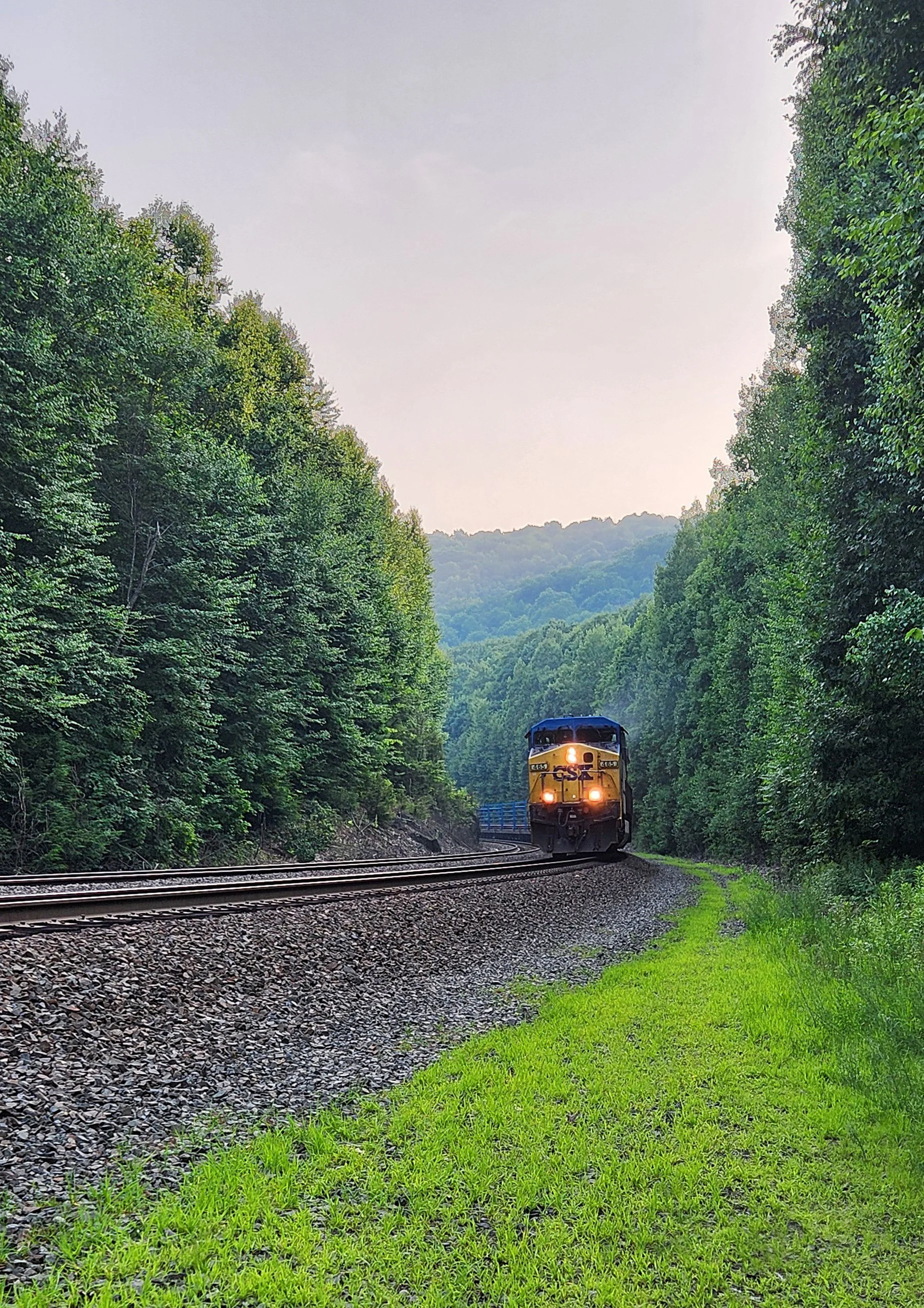
Coming 'round the mountain. Photo by Patricia Racine
A few years ago, on Halloween morning, I was hiking here when the strangest thing came up the trail towards me. Moving at a quick pace was a man, probably in his early 30s, wearing a navy blue jumpsuit, like Michael Myers, big goggles hanging around his neck, and carrying a machete. Being the courteous hiker that I am, I stepped off trail to let him go by; I also needed a second to gather myself. Did I really just see that? When I turned to look back, he was gone, swallowed by the forest. By far that is the weirdest thing I have seen in the woods, and it wasn’t an apparition because the people a mile or so behind me saw the same guy.
On your way back take a little detour to explore the ruins of what was intended to be the Berkshire Cultural Center, a 1960s-era artists colony. There are a few remnants of what could have been an avant-garde sanctuary for creators if the owner hadn’t taken both his wife’s and his own lives. It is worth a little look and a second to ponder what it could have become if things went differently.
This area has a rich history of railroading and if you are interested in learning more you can visit the Chester Railway Station and Museum. The depot there is part of a National Historic Landmark District that includes the Keystone Arches. Historically, the Chester station was a vital stop on the westward heading line to add extra engines to the trains in order to help them tackle the steep mountain sections. The museum contains a nice collection of maps, photographs, and artifacts relating to the Western Railroad; and they recently received the famed railcar from Bernie’s Restaurant, formerly in Chicopee.
A visit to the Keystone Arches is more than a hike in the woods; it is a glimpse of American ambition. These bridges stand as a testament to a time when we built things to last using modest tools and an understanding of the land. Today we can’t fill a pothole and have it last more than six weeks. As the Westfield River continues to flow beneath, these stone giants remain, as always, standing majestically waiting for the next generation to hear their story.