By Peter Cameron
March 2026
The Lee-Huntington Trolley line was designed to be an economic driver for farms and manufacturing in the hill towns of central Berkshire and Hampden Counties, Massachusetts. That never materialized. Its construction from 1911 through 1913 by the New York, New Haven and Hartford Railroad–at the exorbitant cost of $3,000,000 (in1911 dollars) for only 24 miles of track–should have raised red flags. It’s nickname, the “Huckleberry Trolley line,” came from the great number of huckleberries that grew along the track right-of-way—which passengers would dismount and pick during the summer months. Built by a huge conglomerate railroad in the age of increased anti-trust regulation and facing the exploding transportation revolution of the automobile, it was doomed from the outset.
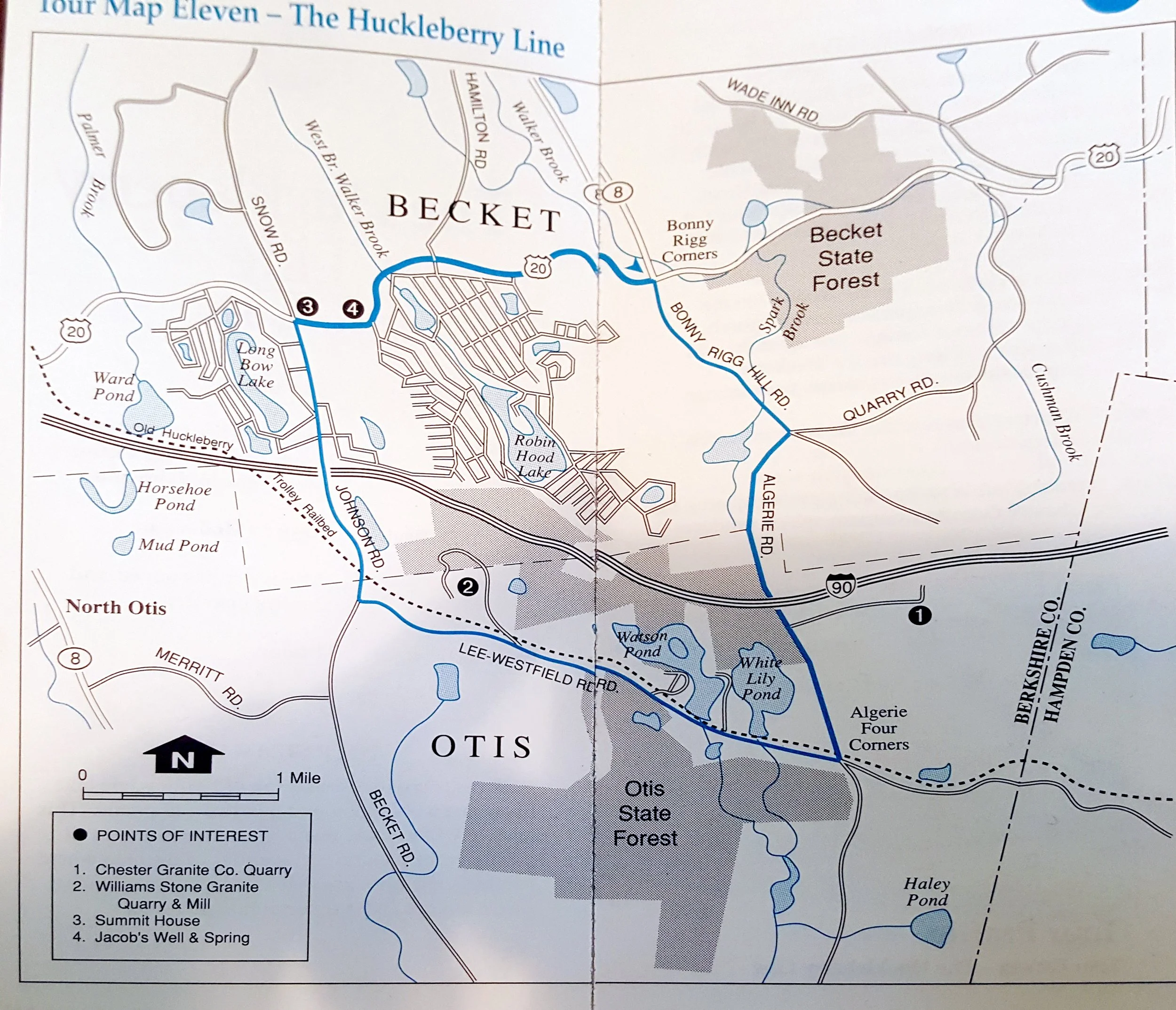
Trolley lines in the early 1900s were usually owned by the larger railroad conglomerates. Conceived by the New York, New Haven and Hartford Railroad Company, the Huckleberry line was to be an extension of their other lines. Originally sited to roughly follow Rt. 20, public input rerouted it on a more southerly route through Blandford, Otis and Becket. Incredibly, this route bypassed the population centers of all three of those towns, so it only benefited Lee and at the other end Huntington.
Starting in the area now occupied by the Lee Premium Outlets, the line followed Rt. 20 east until its intersection with Rt. 8 south, then shifted south toward North Otis and into North Blandford. It descended Cooks Mountain along present day Blandford-Huntington Road into Huntington town center.
In April 1911, ground was broken for the trolley line. Work began where the line intersected Algerie Road, north of East Otis, and progressed in both directions. In 1912, it was necessary to bring in two small construction locomotives. The first was delivered by spiking two rails in front of the engine that inched the engine forward, retrieving the rails behind the engine, and placing the rails back in front. This was done continuously from East Becket onto Rt. 20, south to the fledgling trolley line. The second locomotive was delivered on a huge sledge, towed by 60 teams of horses, for three days, to the railbed. Finished in November 1913, the trolley line had taken 1,000 men and three-and-a-half years to complete.
During the winter of 1914, the New York, New Haven and Hartford Railroad lost its anti-trust battle in the courts and was given until July 1919 to divest itself of all trolley and steamship lines. This caused the Huckelberry line to remain closed for another 18 months. During this closure, numerous washouts from erosion caused track damage. It wasn’t until August 15, 1917 that an inaugural trip from Lee to Huntington was finally completed.
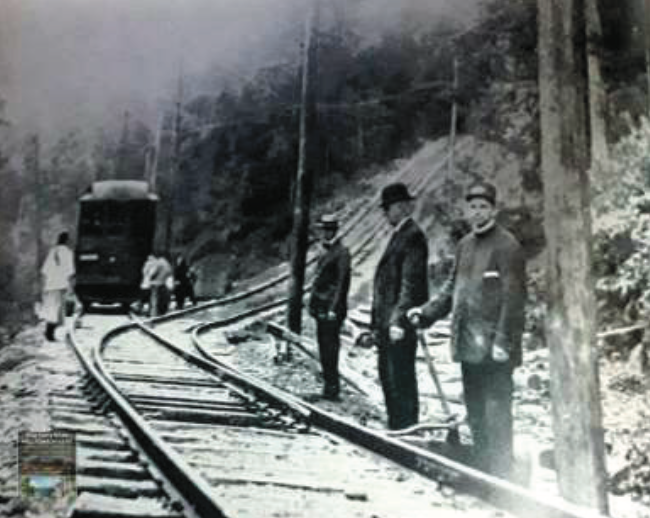
First trip through to Huntinton from Lee scene showing one of the safety sidings on the grade to Huntington. Car has stopped to turn the switch. - The Berkshire Eagle
Other problems plagued the line. Scheduling did not coincide with students’ or workers’ schedules. In Huntington, there was no connection with the Westfield/Springfield trolley line. The price of tickets was two times that of other lines. Some locals claimed more chickens rode the line than paying passengers. In the fall of 1917, the line was suspended as WWI began. When it did run, the summer weekend ridership picked up as picnickers and berry pickers rode the trolley into the mountains.
The entire project was misconceived, mismanaged, and a blunder of huge proportions. It never made a profit and in October 1920, the parent railroad began ripping up its rails. By 1923, it was gone. The roadbed is still recognizable in several places and many hike the route. On the upside, it is said that along the roadbed grow the best huckleberries found anywhere in the Berkshires.